

As It’s FOSS celebrates its 14th anniversary—a milestone that coincides poignantly with the first birthday of its founder’s son—the mood is not one of unmitigated joy, but of existential reflection. For over a decade, this platform has served as a beacon for the Linux and open-source community, providing free education and fostering a culture of software freedom. Yet, today, the digital ecosystem that sustained this mission for fourteen years is undergoing a structural collapse.
The transition from a link-based search economy to an AI-summarization model, championed by industry giants like Google, has fundamentally broken the "quiet deal" that fueled the internet since the turn of the millennium. As traffic evaporates and revenue streams vanish, the question arises: Can independent digital publishing survive in an age where the "answer" is provided, but the source is erased?
The Structural Shift: A Post-Search Reality
For two decades, the open web functioned on a symbiotic relationship: users performed searches, clicked on relevant links, and in doing so, provided publishers with the ad revenue necessary to keep creating content. It was a fair, albeit imperfect, bargain. Today, that model is effectively dead.
The advent of AI-integrated search engines—which prioritize scraping content, synthesizing it into a single, sterile block of text, and presenting it to the user without a single outbound link—has stripped publishers of their primary currency: traffic. The "Google Search" that drove millions of users to independent blogs and forums is, for all intents and purposes, gone.

The Human and Financial Cost
Since the proliferation of generative AI tools like ChatGPT, It’s FOSS has seen a staggering 80% decline in Google search traffic. This is not a temporary algorithm adjustment; it is a permanent pivot in how humanity accesses information. While corporate-backed media conglomerates with diversified revenue streams and venture capital backing can absorb these losses through licensing deals and private equity, independent, community-driven platforms have no such safety net.
The consequence is a "homogenization of knowledge." When AI summarizes the web, it does so through a filter that favors speed over depth, and aggregation over creation. The nuances of troubleshooting a Linux kernel or the passionate debates within the open-source community are lost in the machine’s summary, leaving the creators of that information without a path to sustainability.

Chronology of a Crisis: The Death of the Link
- 2010–2014: The Era of Growth. It’s FOSS is founded. The open-source community grows rapidly, fueled by organic search traffic and the spirit of collaborative problem-solving.
- 2015–2022: The Golden Age of Content. Search Engine Optimization (SEO) rewards deep, long-form technical tutorials. Ad revenue provides a stable foundation for small, independent publishers.
- Late 2022: The Generative Shift. The launch of ChatGPT marks the beginning of the end for traditional search. Traffic begins to plateau as "answers" start appearing directly on search result pages.
- 2024–2026: The AI "Slop" Era. Google and other search providers fully integrate AI-native answers. Outbound link traffic plummets across the independent web.
- Today: The critical juncture. Platforms like It’s FOSS face the decision to either shutter, pivot to a gated model, or rely entirely on the goodwill of their user base to maintain the integrity of the open web.
Supporting Data: Why "Algorithms" Cannot Solve This
Many publishers have attempted to "outrun" the AI by adjusting their content strategies—focusing on long-tail keywords, newsletters, or social media engagement. However, the data suggests that these are merely stop-gap measures. The structural shift is inherent in the design of the new AI interface.
When a user asks, "How do I install dinit on KaOS?", they are no longer visiting the site that wrote the tutorial. They are receiving a machine-generated synthesis. This eliminates the "discovery" phase of the web. Without discovery, there is no brand loyalty, no community building, and no revenue. The "algorithm" is no longer a tool to rank quality content; it is a mechanism to keep the user within the ecosystem of the AI provider.
Implications for the Future of Open Source
If independent publishers fail, the implications for the Linux community are dire. Open-source software thrives on documentation, community tutorials, and the shared experiences of its users. If the platforms that document these experiences disappear, the barrier to entry for new Linux users will rise exponentially.
We risk a future where only the most "profitable" or "corporate-friendly" open-source projects receive documentation, while the niche, community-driven projects are left in the shadows. The freedom of software is inextricably linked to the freedom of the communities that discuss it. If we allow the information ecosystem to become a closed, AI-summarized loop, we lose the diversity of thought that defined the early, open web.

The Call to Action: A Vote for the Open Web
In the face of this systemic challenge, It’s FOSS is choosing transparency over surrender. To mark its 14th anniversary, the platform is launching an initiative to transition away from the broken ad-based model toward a direct-support model.
"Becoming a Plus member is not just about gaining access to extra features; it’s an act of defiance against the erosion of the independent web," says the founder. By offering a $30 discount on lifetime memberships, the platform is betting that its community—those who have benefited from years of free troubleshooting and tutorials—will see the value in preserving a space that puts human knowledge before algorithmic profit.
For those unable to commit to a membership, even a one-time donation serves as a vital vote for the continued existence of an independent, human-curated internet.
Industry Pulse: News from the FOSSverse
Despite the grim outlook for search, the open-source community remains as productive as ever. This week’s updates highlight the ongoing push for innovation despite the shifting economic landscape:

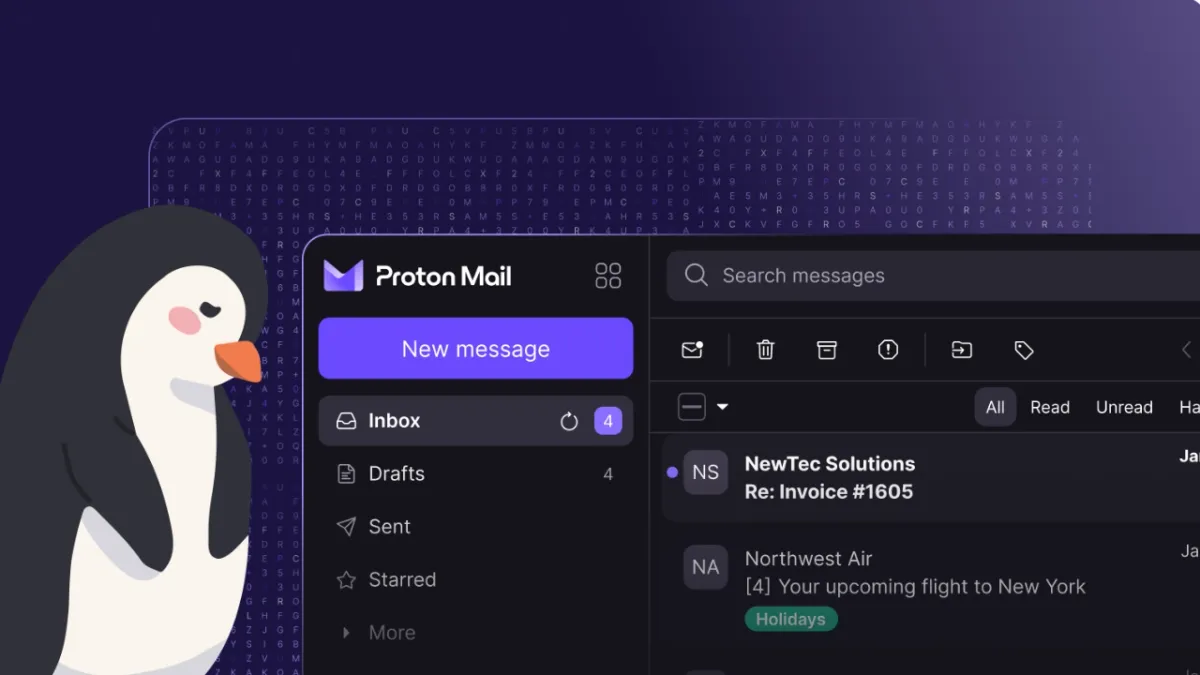
- Proton Ecosystem: Proton is pushing hard on performance and accessibility. A major encryption overhaul has resulted in speeds up to 3x faster for uploads and 2x for downloads. Furthermore, the development of a native Linux GUI client and an official CLI tool demonstrates their commitment to the power-user base.
- Collabora and DocSpace: Both platforms have integrated AI assistance, signaling that even within the FOSS world, AI is being leveraged—but in a way that respects user control and local integration, rather than stripping away the publisher’s agency.
- Systemd Skepticism: The shift by KaOS to use
dinitinstead ofsystemdserves as a reminder that the open-source community remains fiercely independent and willing to challenge the status quo, even when that status quo is the industry standard. - Privacy-First Tools: New projects like Melia, a privacy-focused email client, and AliasVault, a self-hostable alternative to Bitwarden, prove that the demand for control over one’s digital life is higher than ever.
A Legacy of Knowledge
As we reflect on the 14-year journey of It’s FOSS, we are reminded of Alan Turing, who was born on this day in 1954. Turing’s work was the bedrock upon which the modern digital world was built—a world defined by logic, fairness, and the potential for human advancement.
Today, we stand at a crossroads. We can allow the web to become a collection of AI-generated echoes, or we can choose to support the human voices, the tutorials, and the community forums that make the digital world a place of true discovery. The choice, as always, rests with the user. The open web is not a given; it is a community project that requires your participation to survive.